

Laparoscopic Spay near Gainesville, FL
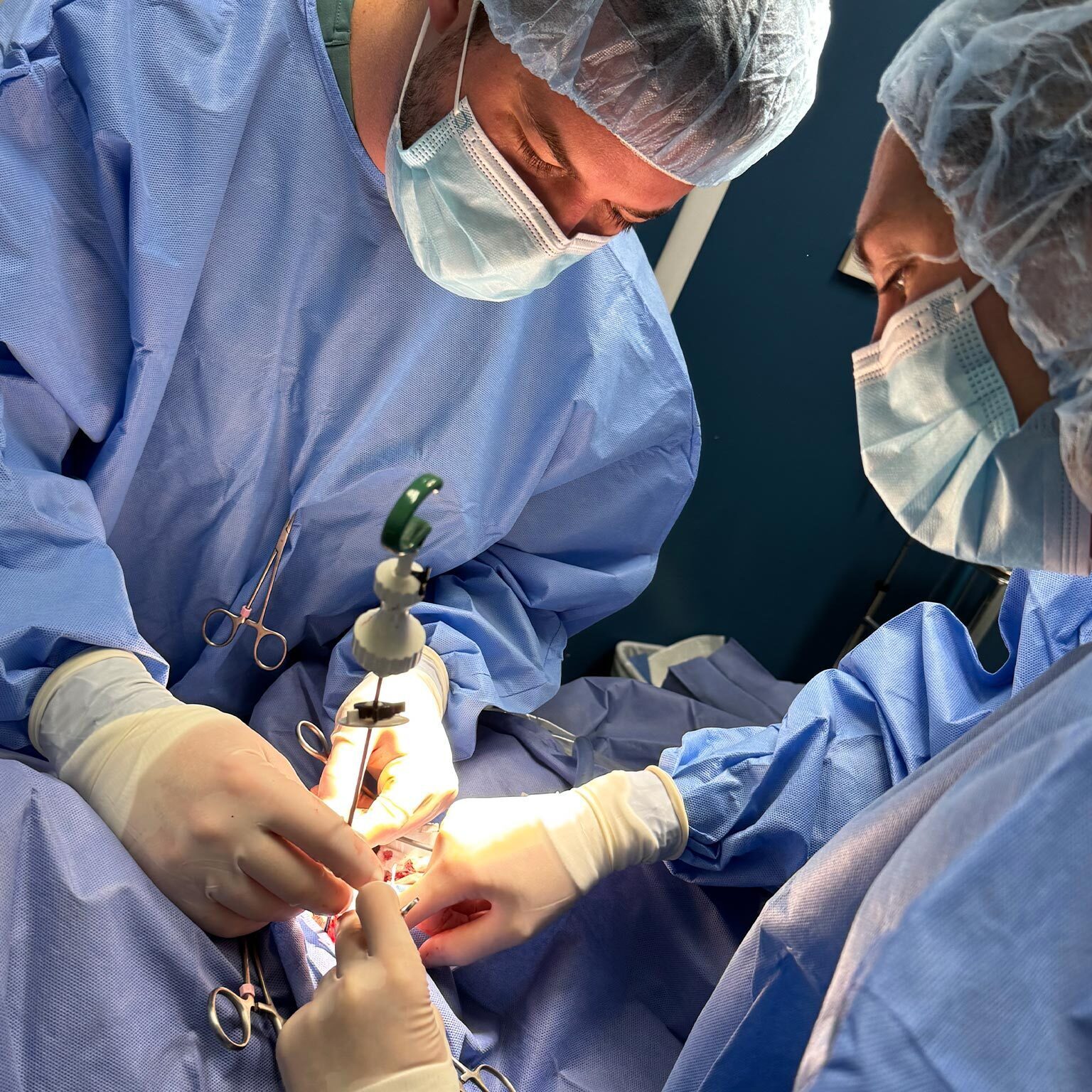
Spaying your pet doesn't have to involve a lengthy or uncomfortable recovery. Laparoscopic spay is a minimally invasive surgical technique that uses tiny incisions and specialized instruments to perform the procedure with exceptional precision. Because there is less disruption to surrounding tissues, many pets experience less pain, fewer complications, and a faster return to normal activity.
This advanced surgical option is exclusively available at our Central location, where our Jacksonville, FL veterinarians prioritize comfort at every stage of the procedure and recovery. To learn more or schedule an appointment, call us at (904) 375-3995.
What’s the difference between laparoscopic spay and traditional spay?
The primary difference between traditional and laparoscopic spay lies in the surgical approach and the recovery experience that follows.
During a traditional spay, a single larger incision is made in the abdomen to remove the ovaries and uterus. While this method is safe and effective, it typically involves greater tissue disruption and a longer healing period.
A laparoscopic spay uses a minimally invasive technique. With the assistance of a small camera and specialized surgical instruments, our veterinarian performs the procedure through a few small incisions and, in most cases, removes only the ovaries. This approach offers excellent precision while reducing unnecessary tissue trauma.
As a result, many pets experience:
- Less post-operative discomfort
- Easier recovery and return to normal activity
- Lower risk of complications such as bleeding or infection
- Smaller incisions with minimal scarring
If you're looking for a way to minimize surgical trauma while still providing the lifelong health benefits of spaying, laparoscopic surgery is a safe, advanced option for many pets.
Frequently Asked Questions About Laparoscopic Spay
A laparoscopic spay is a minimally invasive surgical procedure used to remove a female pet’s ovaries. It differs from traditional spays by using small incisions and a camera (laparoscope) to guide the surgery, resulting in less tissue trauma.
- Less post-operative pain: Smaller incisions mean less discomfort for your pet.
- Easier recovery: Pets typically recover quicker and can resume normal activities sooner.
- Reduced risk of complications: The precision of laparoscopic surgery lowers the risk of excessive bleeding and infection.
- Smaller scars: The smaller incisions leave minimal scarring.
Laparoscopic spays are generally safe for most dogs and cats, but it may not be appropriate for all pets. Very small animals, pets with certain health conditions, or those needing additional reproductive surgeries might not be ideal candidates. Your veterinarian will evaluate your pet’s health and determine if a laparoscopic spay is suitable.
The laparoscopic spay procedure typically takes about 30 to 60 minutes, depending on the pet’s size and specific circumstances.
The smaller incisions used in a laparoscopic spay help reduce pain and support a smoother recovery. Most pets return to normal activity within 10–14 days.
Most laparoscopic spay surgeries are done on an outpatient basis, meaning your pet can go home the same day. However, we may recommend overnight observation in some cases.
- Monitor the incision: Keep an eye on the small incisions for any signs of infection, such as swelling or redness.
- Limit activity: Restrict your pet’s activity for a few days to allow proper healing.
- Pain management: Your veterinarian will prescribe pain medications to keep your pet comfortable.
- Follow-up visit: A follow-up appointment will be scheduled to ensure proper healing.
At Forever Vets, our laparoscopic spay procedures start at $1200. Please note, we partner with Scratchpay and CareCredit to offer flexible payment options for your pet's care.
Ready to Book Your Pet’s Laparoscopic Spay Appointment?
Deciding to spay your pet is an important part of protecting their long-term health, and choosing the right surgical approach can help make the process easier for both you and your pet.
At Forever Vets, we'll help you determine whether a laparoscopic spay is the right choice based on your pet's age, size, and overall health. From your initial consultation through recovery, our experienced veterinary team is committed to providing compassionate, personalized care every step of the way.
If you'd like to learn more about laparoscopic spay or schedule a consultation, contact Forever Vets today. We're here to answer your questions and help you make the best decision for your pet's care.